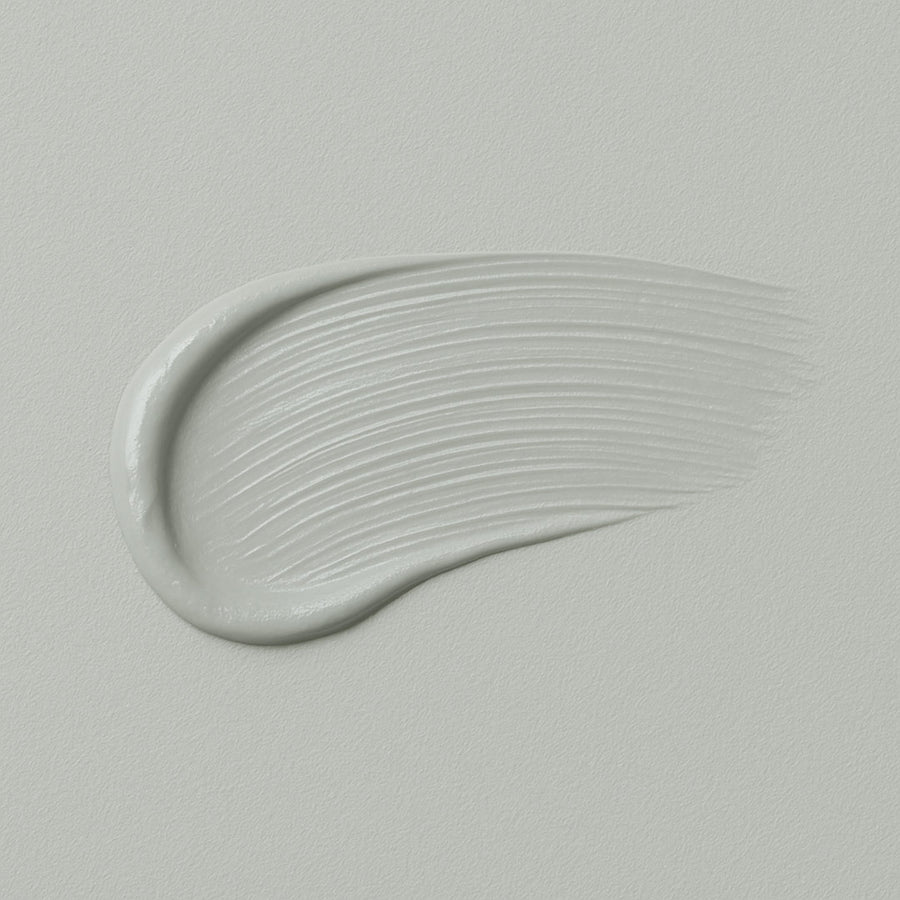
The colours from re-box are 65 wall paint shades, all of which come into being only when you order them. Every shade is mixed to order individually, including the whites. The spectrum runs from near-white lime and linen tones through grey and green to blue and charcoal shades that can turn a room completely around.
Buying wall paint: 65 shades, three sizes, two finishes
The selection in this category is deliberately kept manageable. 65 shades are enough to suit any room, and few enough to decide on in a single evening. Each one comes in 2.5, 5 and 10 litres and in two finishes: matte for a calm surface, silk matte for anything that gets put through its paces. The price depends only on the quantity, not on the finish.
Tinting happens after you order, not before. That's the difference from shelf paint, and the reason why, even for white, there's no standard off-the-shelf can here. The wall paints are water-based, low-emission and made in Germany. If your shade isn't among them, there's the Wunschfarbe – individuell angemischt.
Shades from light to dark
If you're looking for a colour family, it's best to sort by brightness rather than by name. Five groups cover the whole spectrum.
White with character
Blanc Épuré No. 55 is the clear, reduced white of this range — the shade for ceilings and for rooms where nothing should distract. Lait Vanillé No. 56 stands alongside it as the warmer variant. The difference is clear on the sample strip and subtle on the wall — but it decides whether a room feels cool or friendly.
Linen, lime and natural tones
Lin Clair No. 58 and Linen Wash No. 2 both pick up the textile direction: light, warm, softly broken. Canvas Cover No. 30 goes a step further into the natural, towards unbleached canvas. This group is the most rewarding in period buildings, since it sits alongside floorboards, mouldings and old wood without pushing itself into the foreground.
Grey and stone
Harbour Grey No. 31 is the calm mid-grey, Pierre Douce No. 41 the softer, stonier take on the same idea. Forge Grey No. 28 is the dark point at the end: a grey that turns a wall into a surface where something is allowed to hang. Grey needs more light than most people assume — in a north-facing room, you should choose it at least one shade lighter than planned in the sample book.
Green and wood
Olive Drift No. 7 is a muted green that stays calm in daylight and turns warmer under lamplight. Chêne Antique No. 51 sits on the wood side and works well wherever there's already plenty of oak or walnut in the room. Both shades come into their own on a large surface rather than a single stretch of wall.
Blue and the dark shades
Bleu Salon No. 63 is the muted blue for living rooms, Océan Nuit No. 65 the deep night blue for rooms used mostly in the evening. Charbon Nuit No. 49 is almost black and the shade where a sample pays off the most: dark colours shift with the light more than any other.
How a shade tips in the light
A colour isn't a fixed quantity — it's a response to the light in the room. North-facing rooms get cool, even light, so warm shades appear more subdued here, while cool shades quickly turn grey. South-facing rooms are the opposite: sun pushes warm shades towards yellow and makes cool blues and greens pleasantly calm.
Then there's the time of day. A room you see mainly in the evening is shaped by lamplight, which is almost always warmer than daylight. That's exactly why samples on your own wall beat any screen. The Farbmusterbox 65 Stk contains all 65 shades — hold it against the wall you want to paint for a day, and take a look in the morning, at midday and in the evening.
Getting the combination right: white, wood, textiles
The most common question after choosing a colour is which white to pair it with. A pure, cool white on the ceiling makes warm wall shades look older than they are. Conversely, a warm white softens the edge of a cool blue. As a rule of thumb: choose ceiling and wall from the same temperature family, not the same brightness.
- Oak and ash sit well with linen, lime and green tones; they bring their own warmth.
- Walnut and dark woods need a counterweight — light walls or a strong blue, not a mid-brown.
- Textiles matter more than you'd think: a linen curtain breaks the light and softens any wall shade.
- Metal and stone pull towards cool. If you have a lot of stainless steel in the room, go warmer on the wall.
In the living room, bedroom, kitchen and hallway
Living room
The room with the largest surface and the longest view. Mid-tone brightness works best here, ideally in combination: three walls calm, one darker as a backdrop for a sofa or shelf. Matt is the usual choice, because large surfaces feel calmer when they reflect less light.
Bedroom
Here you can go darker than anywhere else. A room you see mostly under lamplight carries depth well. Blues and greens are the classic choice, dark charcoal shades the bold one.
Kitchen
In the kitchen, the finish matters more than the shade. Silk matte is the obvious choice here, since the surfaces near the hob and sink get wiped down regularly. As cabinets already cover half the wall, the rest can easily carry a bolder shade.
Hallway and stairwell
Little daylight, lots of edges, heavy use: the hallway is where silk matte pays off the most. Since it's usually narrow, a very light shade doesn't automatically feel more spacious — often a mid-tone shade with light doors works better.
Home office
Where focused work happens, muted, mid-tone shades are more pleasant than very light walls: they reduce the contrast with the screen. A green behind the monitor is calmer over time than white.
Matt or silk matte, coverage and surfaces
re-box base one (matt) is the matt interior paint for walls and ceilings, and also the tinting base for all shades. re-box silk matte WEISS (seidenmatt) is silk matte, particularly hard-wearing and very easy to clean — the choice for kitchens, hallways and children's rooms. Both finishes come in all 65 shades, and since the price only depends on the quantity, you choose by room, not by budget.
For quantity, plan on roughly 6 to 8 m² per litre and coat. With two coats, 2.5 litres cover approx. 8 to 10 m², 5 litres cover approx. 15 to 20 m², 10 litres cover approx. 30 to 40 m². On very dark, strongly coloured or uneven surfaces, coverage is lower. Suitable for all common, load-bearing interior surfaces: mineral plaster, wallpaper, existing paintwork — clean, dry, stable and free of loose material. On highly absorbent or fresh plaster, a primer is recommended. You'll find out how to prepare the surface beforehand in the magazine under Wände richtig vorbereiten, and the quantity calculation under Wie viel Wandfarbe brauche ich.
The same shade is also available as a lacquer
65 colour names exist twice: once as wall paint, once as lacquer. These are two different materials — here the interior paint for walls and ceilings, there the furniture and lacquer paint in silk gloss for furniture, wood and interior surfaces. What they share is the shade. That lets you keep a wall and the door in front of it in the same shade, or set a deliberate contrast. The full lacquer range is at Lackfarben.
Frequently asked questions about re-box colour shades
How many shades are there here?
65 wall paint shades are available in this category, each in three sizes and two finishes. On top of that, there are sample products and the option to have your own custom shade mixed.
Can I test a shade beforehand?
Yes, that's what the colour sample box with all 65 shades is for. Check the shade on the wall you want to paint, not on your desk — wall orientation, time of day and lighting change the result quite noticeably. This is also worth doing because individually mixed paints are excluded from returns.
How much do I need for a room?
For 20 m² of wall area with two coats, 5 litres is the right size. Work out the area as wall length times room height and subtract large windows and doors. For bold colour changes, say from dark to light, plan for a bit more.
What's the difference between matt and silk matt?
Matt is the calm finish for walls and ceilings, silk matt is especially hard-wearing and very easy to clean. For living and sleeping areas, matt is the usual choice, for kitchens, hallways and children's rooms, silk matt. The price is the same for both, it only depends on the quantity.
Is my paint delivered ready-mixed, or do I have to mix it myself?
You get the shade ready-mixed. Every order is tinted individually, so processing only begins once payment has been received in full, and delivery takes 3 to 5 working days. Shipping is within Germany.
Can I return mixed paint?
No, individually mixed paints are excluded from returns and exchanges. Separately marked white goods without tinting can be returned, as long as they're undamaged and in their original packaging. A sample beforehand is therefore the safest way.
What if my desired shade isn't among them?
Then the shade can be mixed individually. Anna, the digital colour consultant from re-box, goes beyond a simple square-metre calculator when it comes to shade, finish and quantity.